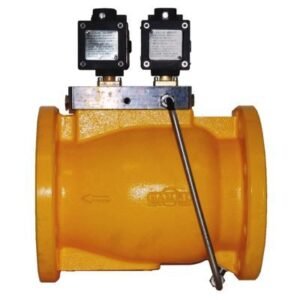
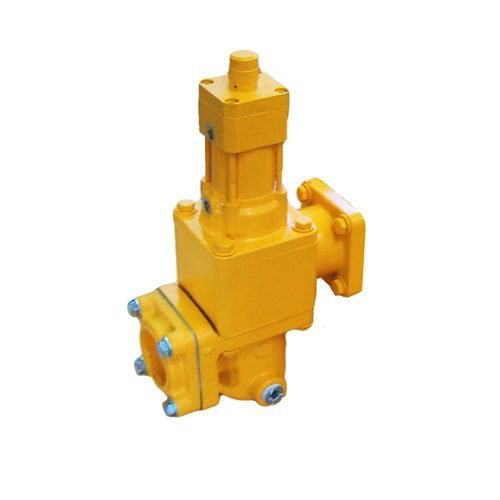
The valve can have the following operating states:
– Full flow open: When the high- and low-flow ports are supplied, the piston, coupled to the shaft, raises the plug until it makes mechanical contact with the bonnet, whilst another piston rises until it makes contact with the bonnet at the top of the valve. Full flow is established in this condition.
– Reduced flow opening: When the low-flow setting is engaged, the piston rises until it comes into contact with the top, lifting the shutter by a distance that depends on the relative distance between the piston and the stop nut. In both movements, the spring is compressed further, which moves the valve to the shut-off position when the supply pressure is intentionally shut off (or due to a fault).
– Switching from full flow to reduced flow: The power supply to the high-flow connection is cut off, causing the spring to lower the shutter and everything connected to it. As the power supply to the low-flow connection remains connected, the descent is halted when the nut comes into contact with the piston.
– Switching from full flow to zero flow: The power supply is switched off simultaneously for both the high-flow and low-flow connections.
– Switch from reduced flow to zero flow: The power supply to the low-flow connection is cut off.
Pneumatic Valves (VP Series)
Pneumatic valves can be used to shut off hydrocarbons such as diesel, petrol, kerosene, aviation fuels and various solvents, with the exception of special versions requested for specific applications.
In standby mode (without low or high air inlet flow), the plug, which is fixed to the shaft, presses against the seal by means of a spring, preventing the flow from passing through.
🔒 Brochure downloads are only available for registered users.
Related products
 Accessories
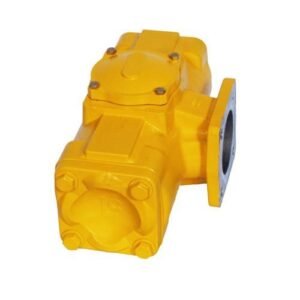
Hydraulic Valves (HPV Series)
- Liquid Controls
M and MA Series High Flow Meters
- Cathodic Protection
RE-Medic Electrode Repair Kit
- Miscellaneous
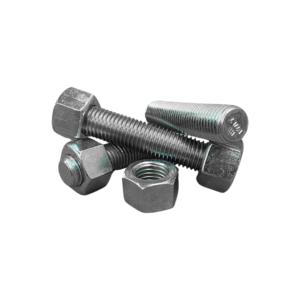
M20 Bolts and Nuts
- Accessories
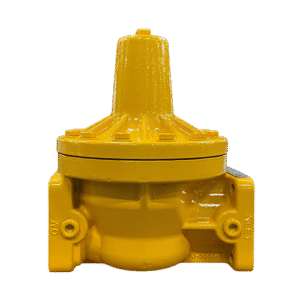
Differential Valves
- Accessories
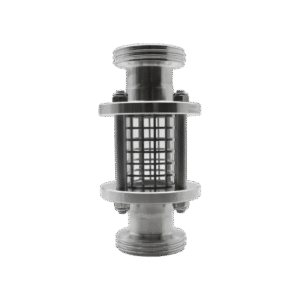
Filters (F-Series)
- Industrial Valves
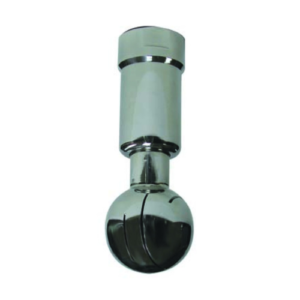
Sanitary Spray Cleaning Ball
- Full Circle
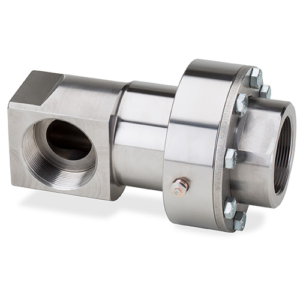
SMAC-SS Swivel Joint
- Industrial Valves
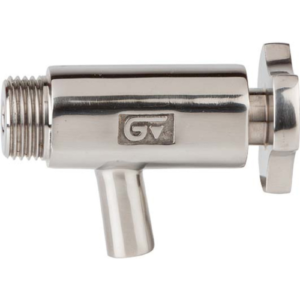
Sanitary Sampling Valve
- End Caps, Joints & Elbows
A105 Plugs 3/6000#
- Diaphragm Seal
Compact Separator